
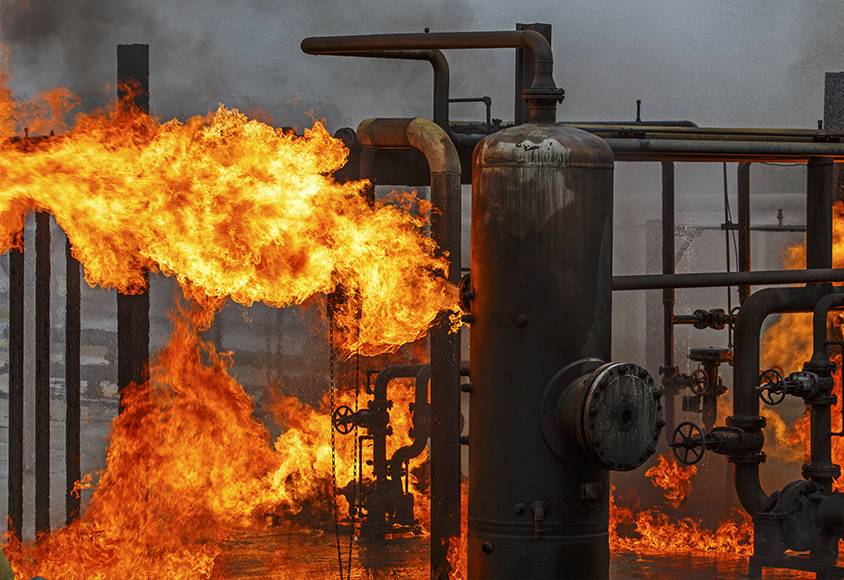
How post-incident response teams assess hidden infrastructure damage, restore control networks, and help process units return to service.
Introduction
Over the past several years, C2C Technical Services, a full-service engineering contractor specializing in electrical and instrumentation construction, has developed a reputation for supporting petrochemical facilities during critical recovery periods.
C2C crews frequently mobilize within hours or days of a fire or major process incident, performing damage assessments, demolition of compromised systems, and reconstruction of the electrical and instrumentation infrastructure required to restore safe operations.
The following projects, drawn from recent C2C engagements across the U.S. Gulf Coast, illustrate the range and technical complexity of post-incident recovery work—and the integrated engineering and field capabilities that make rapid, safe recovery possible.
Work can start as soon as the site is released. C2C’s account managers serve as dedicated points of contact—professionals who have earned the trust of plant personnel through consistent performance and a working knowledge of the facilities they support.
When an incident occurs, trust allows plant management to move quickly and with confidence. C2C recruiting begins staffing the job immediately. Our history and reputation in the industry have given us the contacts to find the right people at the right time. Our onboarding process screens applicants to ensure each team member’s qualifications fit the position.
When the Team Is Already There: Rapid Start After an On-Site Incident
When C2C personnel are already on site, recovery timelines compress significantly.
In March 2026, disaster struck a South Texas chemical plant. C2C crews were conducting a system upgrade in a neighboring unit. Our leadership was able to walk down the damaged area within days of the incident, eliminating the mobilization lag that typically delays early damage assessment.
That immediate, firsthand evaluation allowed plant management to make informed decisions quickly. C2C’s ability to rapidly scale and deploy additional resources to the site meant reconstruction could begin within the same week.
Based on C2C’s performance on the ongoing project, plant management asked the team to lead the rebuild as well. Project leaders developed a recovery plan and mobilized 15 instrumentation and electrical personnel within the same week. Materials were ordered, and reconstruction work began.
In less than three weeks, the team had grown to more than 50 on-site resources.
The agility to pivot from one scope to another—and to immediately put firsthand site knowledge to work—is what made that speed possible.
Scale and Precision: Major Hydrogen Fire Recovery in a Refinery Hydrotreater
Resid hydrotreaters are among the most instrumentation-dense units in a refinery. Fire damage in one does not just destroy equipment; it severs the control infrastructure that keeps the entire process safe.
When a major hydrogen fire struck one such unit, the extent of damage to wiring systems, junction boxes, and instrumentation throughout the unit quickly made clear that extensive reconstruction of its electrical and instrumentation systems was required before restart could be considered.
C2C mobilized within 12 hours and spent the next four months systematically working through demolition, reconstruction, and verification across the unit.
Hydrotreater Fire Recovery by the Numbers
- 75 personnel at peak workforce
- 200,000 feet of compromised instrument cable removed
- 174,000 feet of new instrument cable installed
- 20,000 terminations completed
- 1,300 instrument loops verified
- 58,000 work hours
- Zero safety incidents
Scaling to a peak workforce of 75 required more than a willingness to mobilize. It required the ability to rapidly source, vet, and deploy qualified electricians and instrument technicians on short notice.
C2C’s recruiting team was a decisive factor in meeting that demand. Working in close coordination with operations, they sourced and onboarded a preliminary workforce within days of the site being cleared, without relaxing the qualification standards that work in a safety-critical refinery environment demands.
In the weeks that followed, the team continued to scale the workforce, adding personnel in step with evolving field conditions and emerging scope as it was identified in real time.
Crews demolished and rebuilt power and control circuits serving multiple 480-volt motor systems, repulled 12,000 feet of cable, installed new cable tray, and constructed splice boxes to restore both power and control wiring.
What set this project apart was the depth of engineering integration running parallel to field work. Because the reconstruction required significant changes to the infrastructure, C2C engineers redesigned portions of the control infrastructure, relocating splice boxes and rerouting cable tray systems to match the rebuilt unit.
Engineers developed or revised approximately 800 instrument loop drawings in real time. When original instruments were unavailable, engineers specified replacements.
That integration of engineering and field work—operating simultaneously rather than sequentially—was central to returning the unit to safe operation quickly and without a single safety incident across 58,000 work hours.
Engineering Under Pressure: Refinery Alkylation Unit Recovery
Alkylation units are critical to refinery gasoline blending operations. Extended downtime disrupts production planning and fuel supply commitments. When a hydrocarbon release caused a fire in one refinery’s alkylation unit, returning the unit to service quickly became a top operational priority.
The fire was brief, but heat and flame exposure compromised wiring, junction boxes, and field instrumentation across the process area.
C2C mobilized instrumentation and electrical construction crews within a day of the incident. Over the next two months, a peak workforce of 25 technicians and supervisors removed damaged infrastructure, reinstalled cable, rebuilt terminations, and restored connections throughout the unit.
The compressed restart timeline made coordination especially critical and created a challenge that only integrated operational support could solve.
Original instrumentation could not be sourced quickly enough to meet the startup schedule, and some existing designs required modification to accommodate operational constraints.
C2C technical leaders worked directly alongside client representatives to evaluate each application, identify alternate instrumentation technologies that met both process requirements and the accelerated schedule, and provide updated reference drawings that bridged gaps between existing design documentation and actual field conditions.
When reconstruction was complete, technicians performed loop checks and functional testing to confirm that signals from field instruments were correctly transmitted to control systems before the unit was brought back online.
Technical support on the front line was critical to maintaining the restart schedule. The unit returned to service without a safety incident.
Dual-Scope Execution: Chemical Plant Processing Unit Rebuild
Processing units rely on tightly integrated electrical and instrumentation systems. This means post-incident reconstruction often expands in scope as demolition reveals damage that was not visible from the outside—a challenge compounded when recovery must proceed alongside other plant work.
When a fire damaged a chemical plant unit in East Houston, the C2C account manager’s strong relationship with the maintenance team made C2C the first call, enabling a rapid damage assessment and coordinated recovery within two days of the incident.
Over the next two months, the workforce expanded to a peak of 28 electrical and instrumentation technicians and supervisors.
Crews demolished damaged wiring systems, junction boxes, and field instrumentation compromised by heat and smoke. They then rebuilt the systems by installing new wiring, restoring control connections, and preparing the systems for functional checkout.
What distinguished this project was its dual scope. Capital improvement work was performed in parallel with the fire recovery effort, requiring close coordination between C2C construction crews and plant engineering personnel.
Managing both scopes simultaneously—without compromising the safety or schedule of the recovery—demanded flexible, experienced field execution and tight engineering integration throughout.
Despite conditions typical of post-incident work, where crews routinely encounter previously hidden damage as demolition progresses, the unit was rebuilt and prepared for startup without a safety incident.
What Plant Operators Face After a Process Fire
- Hidden wiring damage often extends far beyond visible fire exposure.
- Documentation may require significant reconstruction.
- Alternate instrumentation may be needed when original devices are unavailable.
- Rapid coordination between engineering and field technicians accelerates recovery.
- Early damage assessment can shorten unit restart timelines.
- Existing contractor relationships on site can compress initial mobilization by days.
From Uncertainty to Restart
Across all of these projects, a consistent pattern emerges. Fires damage more than what is visible: wiring hidden inside cable trays, conduits, and junction boxes; documentation that no longer reflects field conditions; and control systems that cannot be restarted until every loop is verified.
The full extent of the work rarely becomes clear until demolition is already underway.
Successful recovery at scale is an organizational effort that extends beyond engineering and field execution.
Sales and business development teams define scope and align expectations with the client from the first call. Construction and Engineering drive real-time coordination across a workforce that may grow from a handful of people to dozens within days.
Recruiting is often the decisive factor, sourcing, vetting, and onboarding qualified electricians and instrument technicians quickly enough to meet a timeline that cannot wait.
When those functions operate in alignment, the pace of recovery reflects it. This coordination compresses timelines, prevents rework, and keeps recovery on track even when the scope keeps changing.
For petrochemical operators, the speed and accuracy of that work matter. Process units offline for extended periods represent significant operational and economic losses.
The goal is always the same: restore damaged electrical and instrumentation infrastructure safely and efficiently so critical units can return to service.
Rapid Recovery Requires
- Excellent pre-mobilization communication between the site and C2C leadership
- Accurate instrumentation documentation
- Cross-disciplinary recovery teams, including engineering, operations, HR, and sales
- Experienced electricians and instrument technicians
- Real-time engineering support
- Expedited recruiting and workforce deployment
- Rapid material sourcing
- Detailed equipment sell-off procedures
- Continuous coordination with operations teams